What is microneedling?
 AI simulation
Updated November 18, 2026 · Written by the MedSpa Blueprint team
The short answer
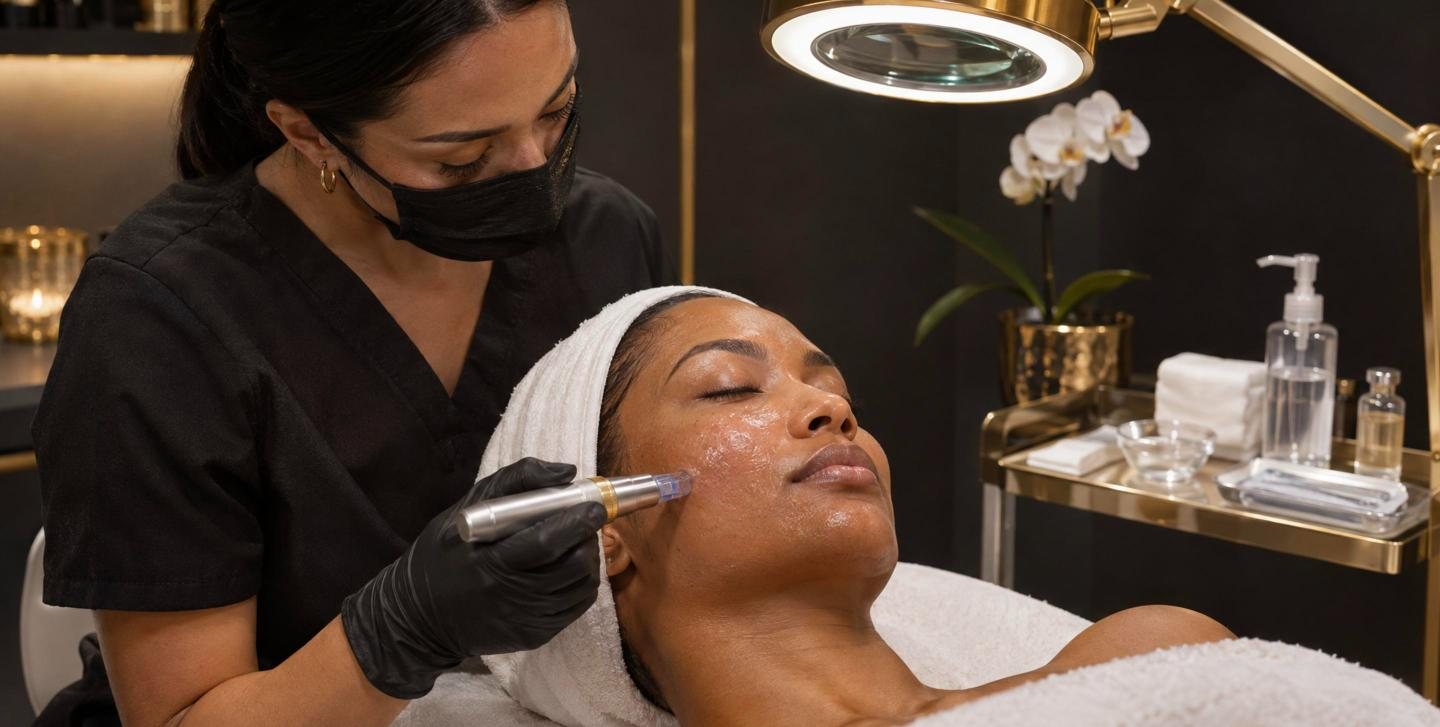
Microneedling is a medical skin treatment that uses very fine needles to make tiny punctures in the skin. As the skin heals, it makes new collagen. The American Academy of Dermatology lists acne scars, dark spots, large pores, melasma, stretch marks, uneven texture and tone, and fine lines among the concerns it's used for.
How it works
The tiny punctures prompt the skin's natural healing response, which includes making collagen. Results appear gradually: the AAD says improvement is often seen within weeks, while full results can take several months.
What a session involves
 AI simulation
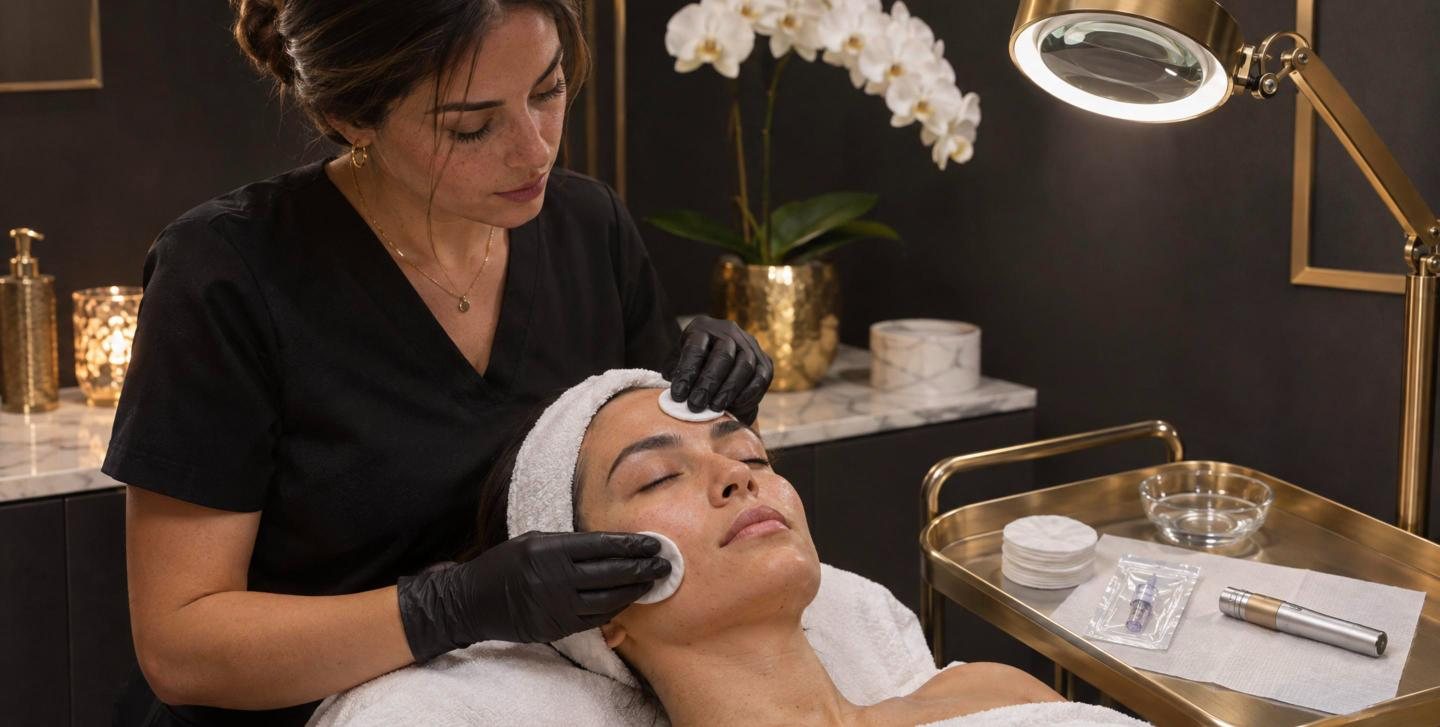
A dermatologist or trained professional uses a pen, roller or similar device. Some treatments add radiofrequency (heat) or are combined with platelet-rich plasma (PRP), made from a small sample of your own blood.
How many sessions
It's often more than one. For acne scars, the AAD mentions 3 to 5 treatments spaced 2 to 4 weeks apart, sometimes with a yearly maintenance session. Your provider will suggest a plan for your skin.
Downtime and side effects
Downtime is usually short. Common reactions include redness (or darker patches on darker skin tones), a sunburn-like feeling, mild discomfort or swelling, which usually settle within a few days to a week. The AAD notes that infection, scarring or lasting discolouration are more likely when the treatment is done by someone without medical training.
Who should avoid it or wait
The AAD advises against microneedling if you heal slowly, have had keloids, have a weakened immune system, or are being treated for skin cancer or receiving radiation in the area. It suggests waiting if you have a recent tan or sunburn, a skin infection, deep or painful pimples, or took isotretinoin within the past month.
At-home devices
At-home tools generally don't puncture the skin and give less noticeable results. Devices that do pierce the skin can cause infection, scarring or colour changes if misused.
Frequently asked questions
Sources
Related resources
Newsletter
Get new resources by email
We'll only email you about MedSpa Blueprint resources. Unsubscribe any time.
Educational, not medical advice. A licensed professional can tell you what's right for your skin.